Posts By: celine

Our western cultures have accepted the idea of ​​psychosomatics (the impact of the mind on the body). On the other hand, we more rarely talk about the opposite phenomenon: It is possible and even strongly recommended to work with the body and the breath to reduce suffering.

duhkha-daurmanasya-aṅgamejayatva-śvāsa-praśvāsa-viksepa-saha-bhuvah

Patañjali yoga-sūtra I.20
Recognising the accompanying symptoms of a mental or emotional disturbance to be able to act upon them

Yesterday I felt a tight feeling in my chest. My breath was shorter than usual. I was more irritable too. This feeling had been rising in me for 2-3 days without being able to really understand the cause, because otherwise everything was fine. Then late yesterday morning as I was looking at the schedule for the week I saw the date. the 21st of February. The anniversary of my mom’s death. There you go, I said to myself! She’s been gone for quite some time now and I admit that this year I didn’t pay much attention to that date. And yet… unconsciously I did. My body remembered this pain of grief.

This is what Patañjali explains in the I.31 sutra. It evokes in the form of a list, as often in Indian culture, the accompanying symptoms of a mental and / or emotional disturbance: What are these symptoms?
#1 duhkha: literally a feeling of oppression, restriction, suffering, tightening, unease.
#2 daurmanasya: negative, troubled, even bad thoughts. They darken the mood.
#3 angamejayatva: these are the physical manifestations of the disorder (agitation, tremors, palpitations).
#4 śvāsa-praśvāsa: the respiratory function is disturbed (shortness of breath).

Yoga and transformation

Nothing new then. Human beings have suffered since they have existed, and when they suffer these symptoms appear. “Each sign can affect others and find expression in them. These symptoms should attract our attention and prompt us to take appropriate actions ”(Extract of Frans Moors’ commentary on this sutra).

The good news is that the reverse is also true. Our western cultures have accepted the idea of ​​psychosomatics (the impact of the mind on the body). On the other hand, we more rarely talk about the opposite phenomenon: It is possible and even strongly recommended to work with the body, the breath and the mind (via meditation) to reduce suffering. It is even the “job” of yoga to bring us:

  • from duhkha to sukha (peace, appeasement, relaxation)
  • from daumanasya to a positive mind
  • and from śvāsa-praśvāsa to directed suksma (smooth and regular breathing).

So I got on my mat. I breathe and meditate a little more than usual these few days. And little by little I see my chest more at ease. 

Postures & breath work to enlighten the mind

This week with my students I will put a special attention on postures and techniques that help to feel immediately more at ease.

Prānāyāma focusing on long exhalations, sun and moon salutations with gentle and positive associations with light, peaceful mantras, inversions.

Professor Krishnamacharya (1888-1989)

He was one of the most influential yoga masters of modern time. Over the course of his long life he shared his knowledge of Yoga as a holistic healing discipline with thousands in his own country and with many others who came to study with him from Europe and America. The yoga-sūtra of Patanjali constitutes one of the pillars of his teachings. Read More.

The teachings of Patañjali yoga sūtra

Yoga tradition holds the Yoga Sūtra of Patañjali (YS) to be the foundational texts of classical Yoga philosophy. Describing and analysing in depth the human mind/psyche, it offers to reflect on the human condition and the options we have on hands to reduce suffering. There is no doubt the Yoga Sūtra of Patañjali (YS) has withstood the test of time and is as relevant today as it was a millennia ago. 

Patañjali & you in 2021?

For that reason I am thrilled to pass it on to my students. Throughout the 1st quarter 2021, I will be highlighting a selection of key sūtras in my yoga & Meditation classes, mingling physical and breath practice to Yoga Philosophy (classes schedules click HERE) Classes available at Lisbon Studio Urbanbliss Lisboa or online.

Celine Chambat

Yoga teacher in Lisbon & Therapist

Vous avez aimé cet article? Lisez aussi: 

Cultivate detachment with Patañjali

Bibliography
Nos cultures occidentales ont bien accepté l’idée du psychosomatique (l’impact du mental sur le physique). En revanche parle moins fréquemment du phénomène inverse: Il est possible et même vivement conseillé de travailler avec le corps, le souffle et le mental (via la meditation) pour apaiser les souffrances. Et c’est même un des objectifs premier du yoga!

duhkha-daurmanasya-aṅgamejayatva-śvāsa-praśvāsa-viksepa-saha-bhuvah

Patañjali yoga-sūtra I.31

Reconnaitre les symptômes accompagnateurs d’une perturbation mentale et/ou émotionnelle

Hier j’ai ressenti un sentiment d’oppression dans la poitrine. Ma respiration était plus courte que d’habitude. J’étais plus irritable aussi. Ce ressenti montait en moi depuis déjà 2-3 jours sans que je puisse vraiment en comprendre la cause car par ailleurs tout allait bien.  Et puis hier en fin de matinée alors que je regardais le planning de la semaine j’ai vu la date. 21 Février. L’anniversaire de la mort de ma maman. Voilà, me suis-je dit! Il est là l’éléphant au milieu de la pièce!

Cela fait déjà pas mal d’années qu’elle nous a quittés et j’avoue que cette année je n’ai pas spécialement fait attention à cette date. Et pourtant… inconsciemment oui. Mon corps s’est rappelé de cette souffrance du deuil.

C’est ce qu’explique Patañjali dans le sūtra I.31. Il évoque sous forme de liste, comme souvent dans la culture indienne, les symptômes accompagnateurs d’une perturbation mentale et/ou émotionnelle: Quels sont ces symptômes?

#1 duhkha: littéralement une sensation d’oppression, restriction, souffrance, un resserrement, un malaise diffus.

#2 daurmanasya: les pensées négatives, troublées, voir mauvaises. Elles assombrissent l’humeur. 

#3 angamejayatva: ce sont les manifestations physiques du dérèglement (agitation, tremblements, palpitations).    

#4 śvāsa-praśvāsa: la fonction respiratoire est dérangée (souffle court, perturbé).   

Yoga et transformation

Rien de nouveau donc. L’être humain depuis qu’il existe souffre et lorsqu’il souffre apparaissent ces symptômes. “Chaque signe peut affecter les autres et y trouver un terrain d’expression. Ces symptômes doivent attirer notre attention et nous inciter à prendre les mesures adéquates” (commentaire de Frans Moors sur ce sūtra). 

La bonne nouvelle, c’est que l’inverse est vrai également. Nos cultures occidentales ont bien accepté l’idée du psychosomatique (l’impact du mental sur le physique). En revanche on commence seulement à (re)parler du / à accepter le phénomène inverse: Il est possible et même vivement conseillé de travailler avec le corps, le souffle et le mental (via la meditation) pour apaiser le mental. C’est même le “job” du yoga de nous amener:

de duhkha vers sukha (paix, apaisement, relâchement)

de daumanasya vers saumanasya (un mental positif)

et de śvāsa-praśvāsa vers dirigea suksma (respiration fluide et régulière).

Alors je me suis mise sur mon tapis. J’ai respiré et médité un peu plus que de coutume. Et peu à peu j’ai confiance de voir mon esprit s’éclaircir. 

Postures & travail sur la respiration pour alléger le coeur et l’esprit

Cette semaine je vais proposer à mes élèves des pratiques qui mettent l’accent sur des postures et techniques de respiration apportants dans la majorité des cas un soulagement immédiat aux participants.

Des prānāyāma avec de longues expirations, des salutations au soleil ou a la lune avec des associations positives à la lumière, des mantras de paix, des inversions.

Professeur Krishnamacharya (1888-1989)

Il fût l’un des enseignants de yoga les plus influents des temps modernes. Au cours de sa longue vie, il a partagé sa connaissance du yoga en tant que discipline de guérison holistique avec des milliers de personnes dans son propre pays et avec beaucoup d’autres qui sont venus étudier avec lui d’Europe et d’Amérique. Les yoga-sūtra de Patanjali constitue l’un des piliers de ses enseignements. Read More.

Les enseignements du yoga sūtra de Patañjali

Le Yoga Sūtra de Patañjali (YS) est considéré comme le texte fondateur de la philosophie classique du yoga. Décrivant et analysant en profondeur l’esprit / la psyché humaine, il nous offre une plate-forme de réflexion unique sur la condition humaine et les options dont nous disposons pour réduire la souffrance. Il ne fait aucun doute que le Yoga Sūtra de Patañjali (YS) a résisté à l’épreuve du temps et est aussi pertinent aujourd’hui qu’il l’était il y a un millénaire.

Patañjali et vous en 2021?

Je suis très heureuse aujourd’hui à l’idée de pouvoir vous transmettre ces enseignements. Tout au long du 1er trimestre (Janvier-Mars 2021), je mettrai en avant dans mes cours de Yoga et de Méditation (voir planning) une sélection de concepts clés du yoga-sūtra, mêlant pratique physique et respiratoire à la philosophie yogique classique. Les cours sont disponibles en présenciel au studio Urbanbliss Lisboa à Lisbonne ou en ligne.

Celine Chambat

Professeur de Yoga à Lisbonne & Therapeute

Vous avez aimé cet article? Lisez aussi: 

Cultiver le détachement selon Patañjali

Bibliographie

śraddhā virya smrti samādhi prajña pūrvaka itaresām

Patañjali yoga-sūtra I.20

From Patanjali’s standpoint, śraddha is the building block, the cornerstone for everything else

śraddha, confidence, faith, fidelity in one’s commitment. Self Confidence, and also confidence in life, in the world around us, in nature, the confidence to be on your path.

From Patanjali’s point of view, śraddha is really the cornerstone for everything else to be. All the other principles, concepts that Patanjali evokes in the yoga-sutras (to ultimately raise consciousness), are based on śraddha as the founding principle. We cannot evolve on a virtuous path, we cannot elevate ourselves, we cannot rise our consciousness if śraddha is not in place, is not well established. śraddha is the pillar, the structure, the necessary foundations.

The Taittiriya Upanisat thus speaks of five layers of the human self: the pañcamaya.

Anna Maya – the level of the body, we consider diet and exercise. This level is said to be the easiest to change!

Prana Maya – the level of the breath, or our energy/life force.

Mano Maya – the level of the mind

Vijnana Maya – the personality

Ananda Maya – the spirit

It gives another reading of the human body and mind. In this model or approach, the human body and mind is represented by a bird and śraddha is the head of that bird, the one that gives direction / drive.

From the point of view of the chakras, śraddha will be associated with the 1st chakra, mūlādhāra chakra: the anchor, the roots, the sources. And from the point of view of Ayurveda, śraddha can be related to the earth element, to “Kapha” dosha. There again, the nourishing earth, the pillar, the structure which allows everything else to grow, to develop harmoniously.

Yoga and transformation

Yoga offers us a whole panoply of tools to cultivate grounding and inner strength (śraddha): postures of course, but also prānāyāmas, the use of specific mantras and visualisations.

For some of us, “the gifted”, śraddha is well in place. For others, cultivating śraddha will be a daily and lifelong job. We are not equal as Patañjali expresses clearly in the yoga-sutras. Indeed he explains that the life path of the “gifted” students endowed with innate śraddha will quickly be oriented towards the practice of meditation and may aspire to samadhi. For the “normal” Yoga practitioner, the path will be different and will be to first install or nurture śraddha, while practicing with commitment and detachment. Read more.

Professor Krishnamacharya (1888-1989)

He was one of the most influential yoga masters of modern time. Over the course of his long life he shared his knowledge of Yoga as a holistic healing discipline with thousands in his own country and with many others who came to study with him from Europe and America. The yoga-sūtra of Patanjali constitutes one of the pillars of his teachings. Read More.

The teachings of Patañjali yoga sūtra

Yoga tradition holds the Yoga Sūtra of Patañjali (YS) to be the foundational texts of classical Yoga philosophy. Describing and analysing in depth the human mind/psyche, it offers to reflect on the human condition and the options we have on hands to reduce suffering. There is no doubt the Yoga Sūtra of Patañjali (YS) has withstood the test of time and is as relevant today as it was a millennia ago. 

Patañjali & you in 2021?

For that reason I am thrilled to pass it on to my students. Throughout the 1st quarter 2021, I will be highlighting a selection of key sūtras in my yoga & Meditation classes, mingling physical and breath practice to Yoga Philosophy (classes schedules click HERE) Classes available at Lisbon Studio Urbanbliss Lisboa or online.

Celine Chambat

Yoga teacher in Lisbon & Therapist

Vous avez aimé cet article? Lisez aussi: 

Cultivate detachment with Patañjali

Bibliography
śraddhā virya smrti samādhi prajña pūrvaka itaresām

Patañjali yoga-sūtra I.20

Du point de vue de Patanjali, śraddha est le socle fondateur et nécessaire .

Notre thème de la semaine: śraddha, la confiance, la foi, la confiance en soi, mais aussi la confiance en la vie, envers le monde qui nous entoure, la nature, la confiance d’être sur son chemin. 

Du point de vue de Patanjali, śraddha c’est vraiment le socle fondateur de tout le reste. Tous les autres principes, concepts que Patanjali évoque dans les yoga-sutras (pour faire évoluer la conscience), s’appuient sur śraddha. On ne peut pas évoluer sur un chemin vertueux, on ne peut pas s’élever, on ne peut pas élever notre conscience si śraddha n’est pas en place, n’est pas bien ancrée. śraddha c’est le pilier, la structure, les fondations. 

La Taittiriya Upanisat parle ainsi des cinq couches de l’Être: les pañcamaya.

Anna Maya – le niveau du corps, le régime et l’exercice. On dit que ce niveau est le plus simple à changer!

Prana Maya – le niveau de la respiration, ou notre énergie / force vitale

Mano Maya – le niveau du mental

Vijnana Maya – la personnalité

Ananda Maya – l’Esprit

Ce système donne une autre lecture du corps et de l’esprit humains. Dans ce modèle, le corps et l’esprit humains sont représentés par un oiseau et śraddha est la tête de cet oiseau, celui qui donne la direction.

Du point de vue des chakras, śraddha va être associée au 1er chakra, mūlādhāra chakra: l’ancrage, les racines, les sources.

Et du point de vue de l’ayurvéda, śraddha peut être relié à l’élément terre, à l’humeur “Kapha”. Là encore, la terre nourricière, le pilier, la structure qui permet à tout le reste de grandir, de se développer harmonieusement.

Yoga et transformation

Le yoga nous offre tout une panoplie d’outils permettant de cultiver l’ancrage et la force intérieure (śraddha): des postures bien sûr, mais aussi des prānāyāmas, l’utilisation de mantras spécifiques et des visualisations.

Pour certains, śraddha est bien en place. Pour d’autres, ce sera un travail quotidien et de toute une vie de cultiver śraddha. Nous ne sommes pas égaux.

Patañjali l’exprime clairement dans les yoga-sūtras, expliquant que le chemin de vie de l’élève “doué” et doté de śraddha sera rapidement orienté vers la pratique de la méditation et pourra aspirer au samadhi.

Pour le pratiquant de Yoga “normal”, le chemin sera différent et consistera d’abord à installer śraddha, en pratiquant avec engagement et détachement. Lire plus.

Professeur Krishnamacharya (1888-1989)

Il fût l’un des enseignants de yoga les plus influents des temps modernes. Au cours de sa longue vie, il a partagé sa connaissance du yoga en tant que discipline de guérison holistique avec des milliers de personnes dans son propre pays et avec beaucoup d’autres qui sont venus étudier avec lui d’Europe et d’Amérique. Les yoga-sūtra de Patanjali constitue l’un des piliers de ses enseignements. Read More.

Les enseignements du yoga sūtra de Patañjali

Le Yoga Sūtra de Patañjali (YS) est considéré comme le texte fondateur de la philosophie classique du yoga. Décrivant et analysant en profondeur l’esprit / la psyché humaine, il nous offre une plate-forme de réflexion unique sur la condition humaine et les options dont nous disposons pour réduire la souffrance. Il ne fait aucun doute que le Yoga Sūtra de Patañjali (YS) a résisté à l’épreuve du temps et est aussi pertinent aujourd’hui qu’il l’était il y a un millénaire.

Patañjali et vous en 2021?

Je suis très heureuse aujourd’hui à l’idée de pouvoir vous transmettre ces enseignements. Tout au long du 1er trimestre (Janvier-Mars 2021), je mettrai en avant dans mes cours de Yoga et de Méditation (voir planning) une sélection de concepts clés du yoga-sūtra, mêlant pratique physique et respiratoire à la philosophie yogique classique. Les cours sont disponibles en présenciel au studio Urbanbliss Lisboa à Lisbonne ou en ligne.

Celine Chambat

Professeur de Yoga à Lisbonne & Therapeute

Vous avez aimé cet article? Lisez aussi: 

Cultiver le détachement selon Patañjali

Bibliographie

abhyāsa-vairāgya bhyām tan nirodhaḥ

Patañjali yoga-sūtra I.12

Pour s’élever vers un chemin plus lumineux, il faut accepter de ne pas pouvoir tout contrôler.

Engagement ou détachement? Les deux mon capitaine! C’est même la clé! 

Dans ce sūtra, Patañjali nous soumet sa première proposition, solution ou “technique” pour nous amener vers un chemin de vie vertueux. Il nous propose d’agir en 2 temps:

1ère partie partie de la proposition: l’action, le faire, abhyāsa.
Pratiquer, faire ce que l’on a à faire avec engagement, avec volonté, avec régularité, assiduité, avec foi, avec tout son coeur.
Et la 2ème partie, qui est souvent plus difficile pour la plupart d’entre nous, est de pratiquer, de “faire” avec détachement, vairāgya.

Les deux semaines passées, Nous avons travaillé sur cette 2ème partie, qui est souvent plus compliquée à réaliser qu’il n’y parait. On parle ici d’un détachement sincère, profond, qui se fait non pas au niveau de l’intellect mais au niveau du coeur (hṛdaye), du corps, des cellules, des gênes, au niveau le plus profond de l’être.

Yoga et transformation

Pour travailler sur vairāgya, le lâcher-prise, le détachement , le yoga nous offre un panel d’outils. Si vous avez participé, vous avez pu utiliser des postures et prānāyāma qui favorisent l’expiration et l’allongement de celle ci. Nous y avons associé des visualisations et sankalpa (intentions). Nous avons pratiqué aussi avec des mantras. Autant d’outils fascinants qui permettent d’aller vers une transformation profonde. Mais attention à ne pas se faire prendre au piège de vos attentes. Il faut pratiquer dans ce but bien sûr mais également accepter de ne pas maitriser les résultats à 100%-)) Engagement ou détachement? Les 2 mon capitaine! C’est la clé! 

Krishnamacharya* disait mesurer le “niveau” ou la maturité d’un yogi non pas à capacité d’exécuter des postures mais à son niveau de détachement, à sa capacité de lâcher-prise. Intéressant non?  

Professeur Krishnamacharya (1888-1989)

Il fût l’un des enseignants de yoga les plus influents des temps modernes. Au cours de sa longue vie, il a partagé sa connaissance du yoga en tant que discipline de guérison holistique avec des milliers de personnes dans son propre pays et avec beaucoup d’autres qui sont venus étudier avec lui d’Europe et d’Amérique. Les yoga-sūtra de Patanjali constitue l’un des piliers de ses enseignements. Read More.

He was one of the most influential yoga masters of modern time. Over the course of his long life he shared his knowledge of Yoga as a holistic healing discipline with thousands in his own country and with many others who came to study with him from Europe and America. The yoga-sūtra of Patanjali constitutes one of the pillars of his teachings. Read More.

Les enseignements du yoga sūtra de Patañjali

Le Yoga Sūtra de Patañjali (YS) est considéré comme le texte fondateur de la philosophie classique du yoga. Décrivant et analysant en profondeur l’esprit / la psyché humaine, il nous offre une plate-forme de réflexion unique sur la condition humaine et les options dont nous disposons pour réduire la souffrance. Il ne fait aucun doute que le Yoga Sūtra de Patañjali (YS) a résisté à l’épreuve du temps et est aussi pertinent aujourd’hui qu’il l’était il y a un millénaire.

Patañjali et vous en 2021?

Je suis très heureuse aujourd’hui à l’idée de pouvoir vous transmettre ces enseignements. Tout au long du 1er trimestre (Janvier-Mars 2021), je mettrai en avant dans mes cours de Yoga et de Méditation (voir planning) une sélection de concepts clés du yoga-sūtra, mêlant pratique physique et respiratoire à la philosophie yogique classique. Les cours sont disponibles en présenciel au studio Urbanbliss Lisboa à Lisbonne ou en ligne.

Celine Chambat

Professeur de Yoga à Lisbonne & Therapeute

Vous avez aimé cet article? Lisez aussi: 

Cultiver le détachement selon Patañjali

Bibliographie

abhyāsa-vairāgya bhyām tan nirodhaḥ

Patañjali yoga-sūtra I.12

To rise to a brighter path, you have to accept that you cannot control everything.

Commitment or detachment? Both Captain! It’s even the key! 

In this sutra, Patañjali presents us his first proposal, solution or “technique” to guide us towards a virtuous path of life. He proposes that we act in 2 steps:

Part 1 of the proposition: action, practice, abhyāsa. Practice, do what you have to do with commitment, with will, with regularity, assiduity, with faith, with all your heart.
And the 2nd part, which is often more difficult for most of us, is to practice, to “do” with detachment, vairāgya.

Last two weeks, we have been working on this 2nd part of the proposition, which is often more complicated to achieve than it seems. We are talking about a sincere, deep detachment, which takes place not at the level of the intellect but at the level of the heart (hṛdaye), of the body, of the cells, of the genes, at the deepest level of being.

Yoga and transformation

To work on vairāgya, letting go, detachment, yoga offers us a panel of tools. If you participated, you may have used postures and prānāyāma that promote the expiration and lengthening of it. We have associated visualizations and sankalpa (intentions) with it. We also practiced with mantras. So many fascinating tools that allow us to move towards a profound transformation. But be careful not to get caught up in your expectations. It is necessary to practice for this purpose of course but also to accept not to control the results 100% -))
Commitment or detachment? Both Captain! This is the key!

Krishnamacharya* said he measured the “level” of a yogi not in his capacity to perform postures but in his level of detachment, in his capacity of letting go. Interesting, isn’t it?

Professor Krishnamacharya (1888-1989)

He was one of the most influential yoga masters of modern time. Over the course of his long life he shared his knowledge of Yoga as a holistic healing discipline with thousands in his own country and with many others who came to study with him from Europe and America. The yoga-sūtra of Patanjali constitutes one of the pillars of his teachings. Read More.

The teachings of Patañjali yoga sūtra

Yoga tradition holds the Yoga Sūtra of Patañjali (YS) to be the foundational texts of classical Yoga philosophy. Describing and analysing in depth the human mind/psyche, it offers to reflect on the human condition and the options we have on hands to reduce suffering. There is no doubt the Yoga Sūtra of Patañjali (YS) has withstood the test of time and is as relevant today as it was a millennia ago. 

Patañjali & you in 2021?

For that reason I am thrilled to pass it on to my students. Throughout the 1st quarter 2021, I will be highlighting a selection of key sūtras in my yoga & Meditation classes, mingling physical and breath practice to Yoga Philosophy (classes schedules click HERE) Classes available at Lisbon Studio Urbanbliss Lisboa or online.

Celine Chambat

Yoga teacher in Lisbon & Therapist

Vous avez aimé cet article? Lisez aussi: 

Cultivate detachment with Patañjali

Bibliography
dṛsta-ānuśravika-visaya-vitṛsņasya vaśikāra-saṃjñã-vairāgyam

Patañjali yoga-sūtra I.15

To rise to a state of pure consciousness, one must first cultivate detachment.

This week, following on from last week’s sutra (yoga-sutra I.12), we will dwell a little more on the fundamental concept of vairāgya: detachment or letting go. Patanjali is telling us here in essence: To rise to a state of pure consciousness as well as deep happiness, one must first cultivate detachment.

“Mastery in this detachment is achieved when, in full awareness, the desire for sensory objects and for subtler enjoyments that we have heard of but never experienced, has disappeared.” (Commentaire de Frans Moors du sūtra I.15 – Translated by Valérie Faneco)

Krishnamacharya* said he measured the “level” of a yogi not in his capacity to perform postures but in his level of detachment, in his capacity of letting go. Interesting, isn’t it?

Professor Krishnamacharya (1888-1989)

He was one of the most influential yoga masters of modern time. Over the course of his long life he shared his knowledge of Yoga as a holistic healing discipline with thousands in his own country and with many others who came to study with him from Europe and America. The yoga-sūtra of Patanjali constitutes one of the pillars of his teachings. Read More.

The teachings of Patañjali yoga sūtra

Yoga tradition holds the Yoga Sūtra of Patañjali (YS) to be the foundational texts of classical Yoga philosophy. Describing and analysing in depth the human mind/psyche, it offers to reflect on the human condition and the options we have on hands to reduce suffering. There is no doubt the Yoga Sūtra of Patañjali (YS) has withstood the test of time and is as relevant today as it was a millennia ago. 

Patañjali & you in 2021?

For that reason I am thrilled to pass it on to my students. Throughout the 1st quarter 2021, I will be highlighting a selection of key sūtras in my yoga & Meditation classes, mingling physical and breath practice to Yoga Philosophy (classes schedules click HERE) Classes available at Lisbon Studio Urbanbliss Lisboa or online.

Celine Chambat

Yoga teacher in Lisbon & Therapist

You enjoyed this article? Please read: 

5 key tips for cultivating balance, good health & happiness

Bibliography

dṛsta-ānuśravika-visaya-vitṛsņasya vaśikāra-saṃjñã-vairāgyam

Patañjali yoga-sūtra I.15

Pour élever son niveau de conscience, il faut d’abord cultiver le détachement.

Cette semaine, dans la continuité du sūtra de la semaine passée (yoga-sūtra I.12), nous nous attarderons un peu encore sur le concept fondamental de vairāgya: le détachement. Patanjali nous dit ici en essence: Pour s’élever vers un état de conscience et de bonheur pur et profond, il faut d’abord cultiver le détachement.

“Une maîtrise du détachement existe lorsque, en parfaite conscience, ont disparu les désirs et les attractions envers les objets offerts à nos sens et les jouissances plus subtiles dont nous avons entendu parler sans jamais les expérimenter.” (Commentaire de Frans Moors du sūtra I.15)

Krishnamacharya* disait mesurer le “niveau” ou la maturité d’un yogi non pas à capacité d’exécuter des postures mais à son niveau de détachement, à sa capacité de lâcher-prise. Intéressant non?  

Professeur Krishnamacharya (1888-1989)

Il fût l’un des enseignants de yoga les plus influents des temps modernes. Au cours de sa longue vie, il a partagé sa connaissance du yoga en tant que discipline de guérison holistique avec des milliers de personnes dans son propre pays et avec beaucoup d’autres qui sont venus étudier avec lui d’Europe et d’Amérique. Les yoga-sūtra de Patanjali constitue l’un des piliers de ses enseignements. Read More.

He was one of the most influential yoga masters of modern time. Over the course of his long life he shared his knowledge of Yoga as a holistic healing discipline with thousands in his own country and with many others who came to study with him from Europe and America. The yoga-sūtra of Patanjali constitutes one of the pillars of his teachings. Read More.

Les enseignements du yoga sūtra de Patañjali

Le Yoga Sūtra de Patañjali (YS) est considéré comme le texte fondateur de la philosophie classique du yoga. Décrivant et analysant en profondeur l’esprit / la psyché humaine, il nous offre une plate-forme de réflexion unique sur la condition humaine et les options dont nous disposons pour réduire la souffrance. Il ne fait aucun doute que le Yoga Sūtra de Patañjali (YS) a résisté à l’épreuve du temps et est aussi pertinent aujourd’hui qu’il l’était il y a un millénaire.

Patañjali et vous en 2021?

Je suis très heureuse aujourd’hui à l’idée de pouvoir vous transmettre ces enseignements. Tout au long du 1er trimestre (Janvier-Mars 2021), je mettrai en avant dans mes cours de Yoga et de Méditation (voir planning) une sélection de concepts clés du yoga-sūtra, mêlant pratique physique et respiratoire à la philosophie yogique classique. Les cours sont disponibles en présenciel au studio Urbanbliss Lisboa à Lisbonne ou en ligne.

Celine Chambat

Professeur de Yoga à Lisbonne & Therapeute

Vous avez aimé cet article? Lisez aussi: 

5 Conseils clés pour cultiver l’équilibre, la bonne santé et le bonheur

Bibliographie

*Article en Français – Clickez ici*

Human vision performs very well compared to other species. Humans can see both near and far, day and night, 2D & 3D and are sensitive to colors and contrasts. Our vision is generalist and efficient. However, in the modern world (city life, use of screens, pollution, etc.), our eyes are both misused (we mainly use them for near vision, especially on a screen) and overused since they are often used instead of the other senses. They therefore suffer from eye fatigue and various disorders. Human vision is becoming more and more “specialist” and less and less efficient. This is how Yoga for the eyes has become a need of the modern world.

YOGA FOR THE EYES

It is the research of Doctor Bates, famous American ophthalmologist of the beginning of the XXth century which establishes for the first time in the world of Western medicine a very clear and very strong link between the good health of the body in general and the good health of the eyes. . Today it is an established fact that certain diseases such as diabetes for example or diseases of the liver and gallbladder have a direct impact on the quality of vision. Likewise, high blood pressure will often cause eye problems. It therefore seems obvious that vision disorders cannot be treated without taking into account the health of the person as a whole.

In the Indian culture with Ayurveda and in traditional Chinese medicine, this has always been established fact, Indeed, an holistic approach the human beings is fundamental for both of these traditional and ancestral health systems.

Thanks to a set of practices and lifestyle habits, yoga, and more specifically yoga of the eyes, offers concrete and varied solutions to improve vision.

PROMOTE THE CIRCULATION OF ENERGY IN THE BODY

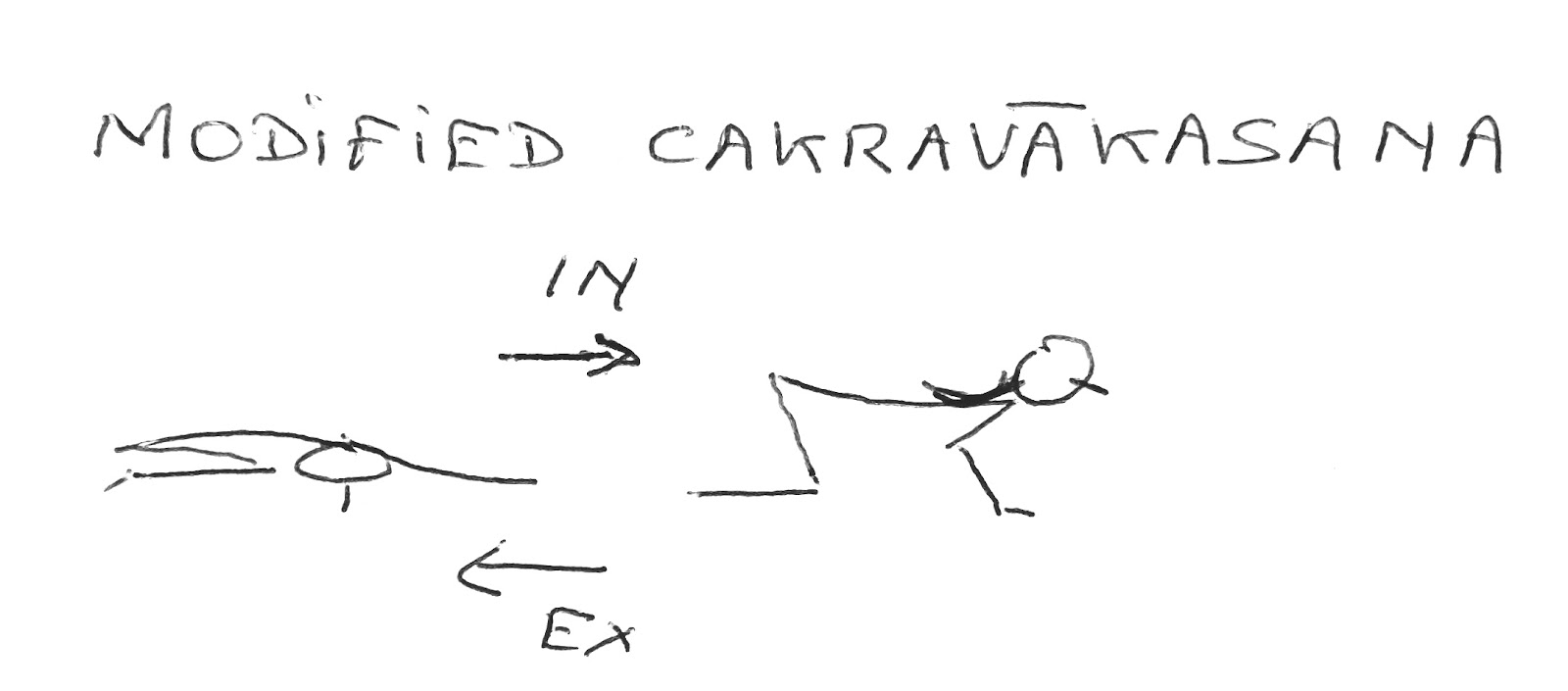
Regular practice of yoga and prānayama improves the circulation of energy flows in the body and eliminates or reduces certain blockages. Yoga for the eyes features mainly postures that aim to smoothen and promote mobility in the cervical spine such as for example bhujangāsana or cakravākasana (often in modified forms) or simple movements of the arms (standing or lying down) for example.

The technique of nadi-śodana or alternating nostril breathing is also often beneficial (except of course if you have a stuffy nose). It is balancing and stimulating at the same time.

CULTIVATE GROUNDING AND BALANCE

By cultivating grounding and balance. To see properly, you need a stable base where the energy flows well. In a way, our eyes are the lens of the camera and the body is the foot. For the image to be good, the optics must be in good working order and the foot must be stable!

REDUCE STRESS

Stress is often responsible for the degradation of our energy level. It is known that a strong emotion that involves a significant rise in stress, such as bereavement, moving house or even “professional burnout”, frequently causes a sudden drop in vision. Channeling your stress and emotions therefore greatly contributes to improving your vision. Here again, Yoga and Meditation are powerful allies.

REDUCE TOXINS IN YOUR BODY

It starts of course with a healthy lifestyle and a good diet. The less toxins there are in the body, the easier it is to eliminate them. But there are times when there is no choice. I am thinking in particular of heavy medical treatments where the patient is forced to ingest and digest and eliminate a large amount of toxic substances. Yoga offers a wide range of detoxification techniques both through postures, breathing exercises, but also mantras or visualization (meditative practices) that help the body and mind to eliminate more effectively.

More specifically, Ayurveda offers eye massages in the form of a “Ghee bath” which aim to promote detoxification.

DO BOTH: MOBILIZE AND RELAX THE EYES

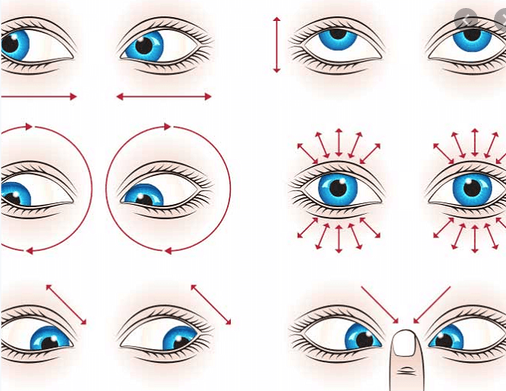
At last, yoga for the eyes offers a whole range of eye mobility and relaxation exercises, very playful and very varied, which allow the different eye muscles to work.

  • Work eye focus:
    In the modern context, the eye is used to seeing up close (screen, screen and… screen). We are losing our ability to see far and above all to adapt quickly. The first exercise that I propose to you is to fix a point in the distance. Ideally a tree or something far from you outside. When it is in focus, stare at an object near you. When it is in focus, return to the object in the distance. And so on as quickly as possible. Ideally, do this every 30 minutes if you are working on a computer. Ball and ball games are also great for this!
  • Engage your eyes muscles!

Laterally. Look to the right and then to the left quickly several times Eyes open then eyes closed. Same thing from top to bottom then diagonally. Warning! It is important to take a break between each exercise. The best is to practice the technique of palming between each exercise (see below).

  • Coordination & strengthening of your eyes muscles:

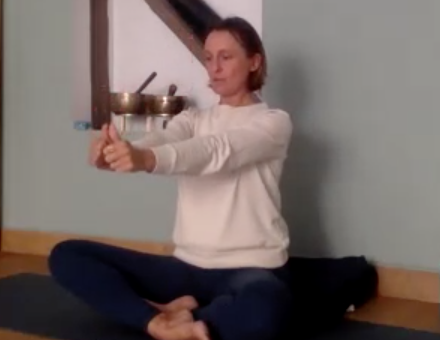
Arms outstretched in front of you, eyes open. Move the left thumb / arm to the side and follow with your gaze. Same thing when coming back. Then close your eyes. Move your thumb in the same way and “follow with your gaze” the darkened eyes. At the end, open your eyes. Do the same on the way back and then the same on the other side. It is an interesting exercise that promotes both the mechanical and the cognitive aspect.

yoga des yeux exercice 1
Arms outstretched, eyes opened.
Move the left thumb / arm to the side and follow with your gaze.
  • Meditation on a candle flame
    Sit in your meditation posture (on the floor or with supports) with your back straight and a firm seat. Stare at the candle for at least 5 minutes (more if possible, there is no limit). Let yourself come into osmosis with this source of light. The flame of the candle is a light that does not burn the eyes. This practice allows you to relax the eyes and go beyond just working on the vision.
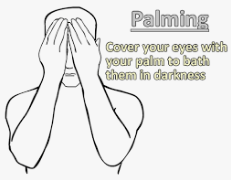
  • Palming
    This is one of the most famous eye yoga exercises and was already prescribed by Dr Bates. It consists of putting the two hands in the shape of a shell on the closed eyes, making sure that the light does not pass.
yoga des yeux – palming exercice
yoga des yeux - palming exercice

In conclusion, I would say through the yoga of the eyes it is also the development of a certain inner gaze that is established. The workshops that I offer give you a good introduction to this surprisingly vast subject, and avenues of understanding and proposals to improve your vision. However, it is up to each one to continue or not his research towards an interior look. You can obviously contact me for individual yoga therapy sessions, Paris or my yoga & meditation retreats. I am also available via Zoom for online sessions.

Céline Chambat

Yoga Teacher & Therapist

*Article en Français ici*

Yoga as a powerful personal development tool

Yoga is now widely accepted in every corner of the world and yet its philosophical merit is often undermined.

At the start of 2021, my new year proposition is to revisit the fundamentals. The teachings of Patañjali will serve as a support and a common thread throughout the first quarter.

The teachings of Patañjali yoga sūtra

Yoga tradition holds the Yoga Sūtra of Patañjali (YS) to be the foundational texts of classical Yoga philosophy. Describing and analysing in depth the human mind/psyche, it offers to reflect on the human condition and the options we have on hands to reduce suffering. There is no doubt the Yoga Sūtra of Patañjali (YS) has withstood the test of time and is as relevant today as it was a millennia ago. 

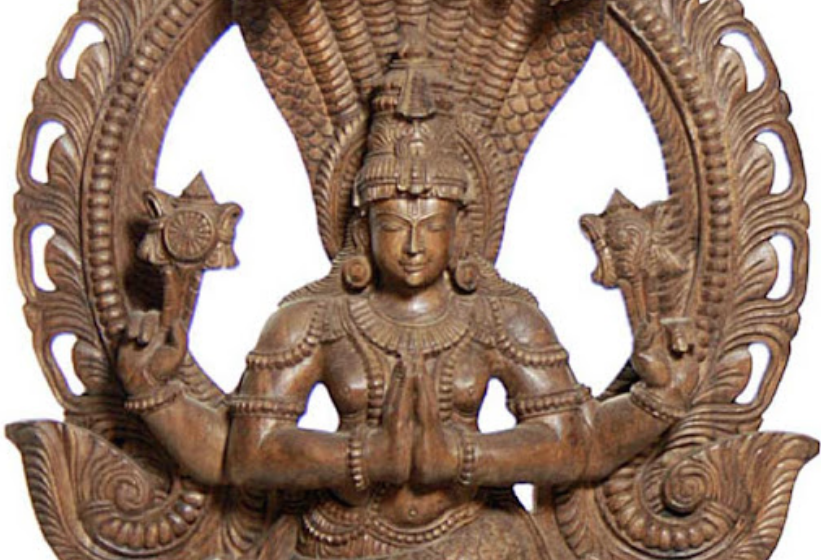
Patañjali, the fundamentals of yoga

Studying the Yoga Sūtra of Patañjali (YS) has been a life changing discovery to me and clearly the highlight of my Yoga teacher training. I am immensely grateful to have had the opportunity to study this text with Valerie Faneco (Eka Yoga Institute, Singapore) and then with Anne Poirier (Institut Français du Yoga) over the past 10 years. 

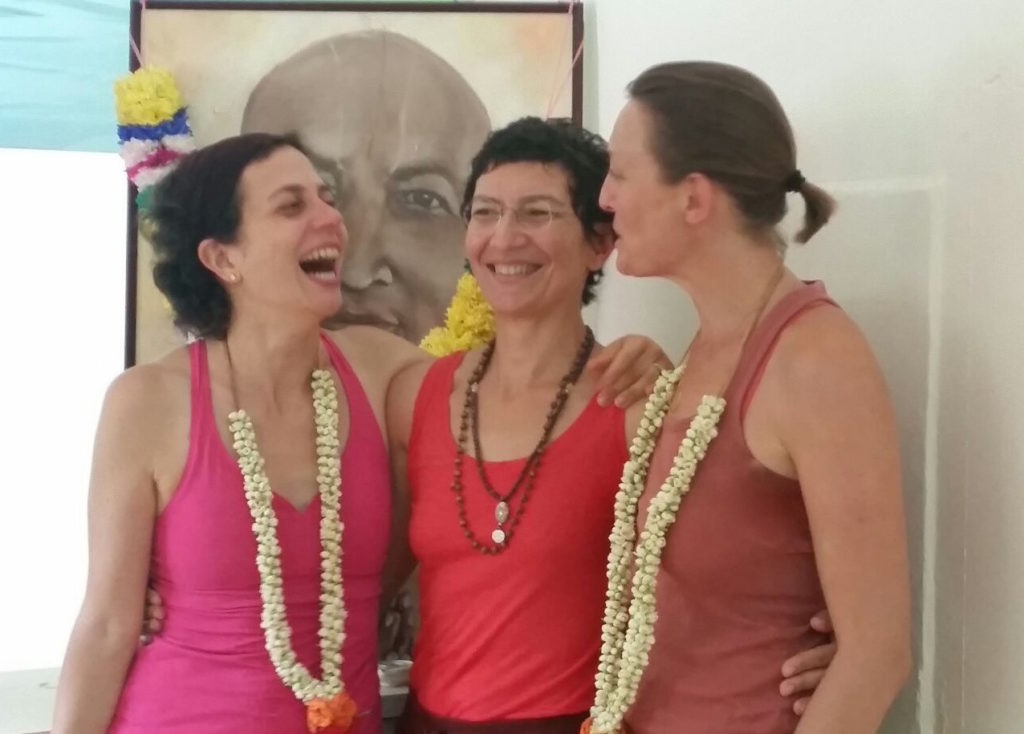
Jehanne & I with our teacher Valérie Faneco

yoga in the news

I chose to illustrate my point by quoting Emmanuel Carrère poignant, deep and sincere book, Yoga, which is currently making headlines in France. So let’s take advantage of it! Indeed “yes!” the yoga-sutra of Patanjali has its place in the modern world. Its study is invaluable in guiding us towards more peace and serenity.

My apology if the translation to English is not 100% accurate (the book was written in French and the translation is mine).

There is a canonical text on yoga, dating from three centuries AD […] attributed to Patanjali […]. In the perspective of a book on yoga and meditation that I was about to write […] I went every morning during winter 2015 to read Patanjali at the café de l’Eglise […], comparing several translations & commentaries [ …].

Patanjali, like all Indian school of thoughts since the time of the Upanishads, […], is only interested in one question: is there a way out of this mess that we call the world, the human condition , […]? Is ‘de-conditioning’ possible? […] “Apart from that, say Patanjali and Hervé, nothing deserves to be known”. The good news is, […] the answer is yes. There is an exit. ‘De-conditioning’ is possible. Not easy, it’s the work of a lifetime, or several lifetimes, but possible, and yoga aims at that.

It is a technique of going beyond consciousness by observing consciousness. Patanjali is an outstanding observer, he knows the unconscious at least as well as Freud and he exposes his discoveries in the Indian way, that is to say by drawing up lists: the six darshanas (these are the categories of Brahmanic thought: yoga is one of them), the three gunas (the modes of being of consciousness), the five yamas (the necessary abstinences), the five niyamas (the disciplines no less necessary), the five matrices of citta vritti (all that carries the river of the mind), the eight branches of ashtanga (which is the tree of yoga) […]. The lists and classifications of psychic and spiritual phenomena that Patanjali draws up […] deserve to be studied in detail.

Extrait du Livre Yoga d’ Emmanuel Carrère 
Chapitre: Patanjali au café de l’Eglise (p74-76)

Patañjali & you in 2021?

For that reason I am thrilled to pass it on to my students. Throughout the 1st semester 2021, I will be highlighting a selection of key sūtras in my yoga & Meditation classes, mingling physical and breath practice to Yoga Philosophy (classes schedules click HERE) Classes available at Lisbon Studio Urbanbliss Lisboa or online.

Celine Chambat

Yoga & Meditation teacher in Lisbon & Therapist

You enjoyed this article? Please read: 

5 KEY TIPS FOR CULTIVATING BALANCE, GOOD HEALTH AND HAPPINESS

Bibliography